
Studio notes
·
4 min read
A year in the dye garden

Words by
Ada Okafor
Weld, madder and woad grow in the yard behind the textile room. This is how a handful of plants gives us a whole season of colour.

Behind the textile room there is a strip of ground no bigger than two parking spaces. Four years ago it was gravel. Now it grows most of the colour we use in our natural dyeing classes.
Spring: sowing
We sow woad for blues, weld for bright yellows and dyer’s chamomile for softer golds. Madder, which gives us reds and pinks, takes three years before its roots are ready, so it gets its own bed and a lot of patience.
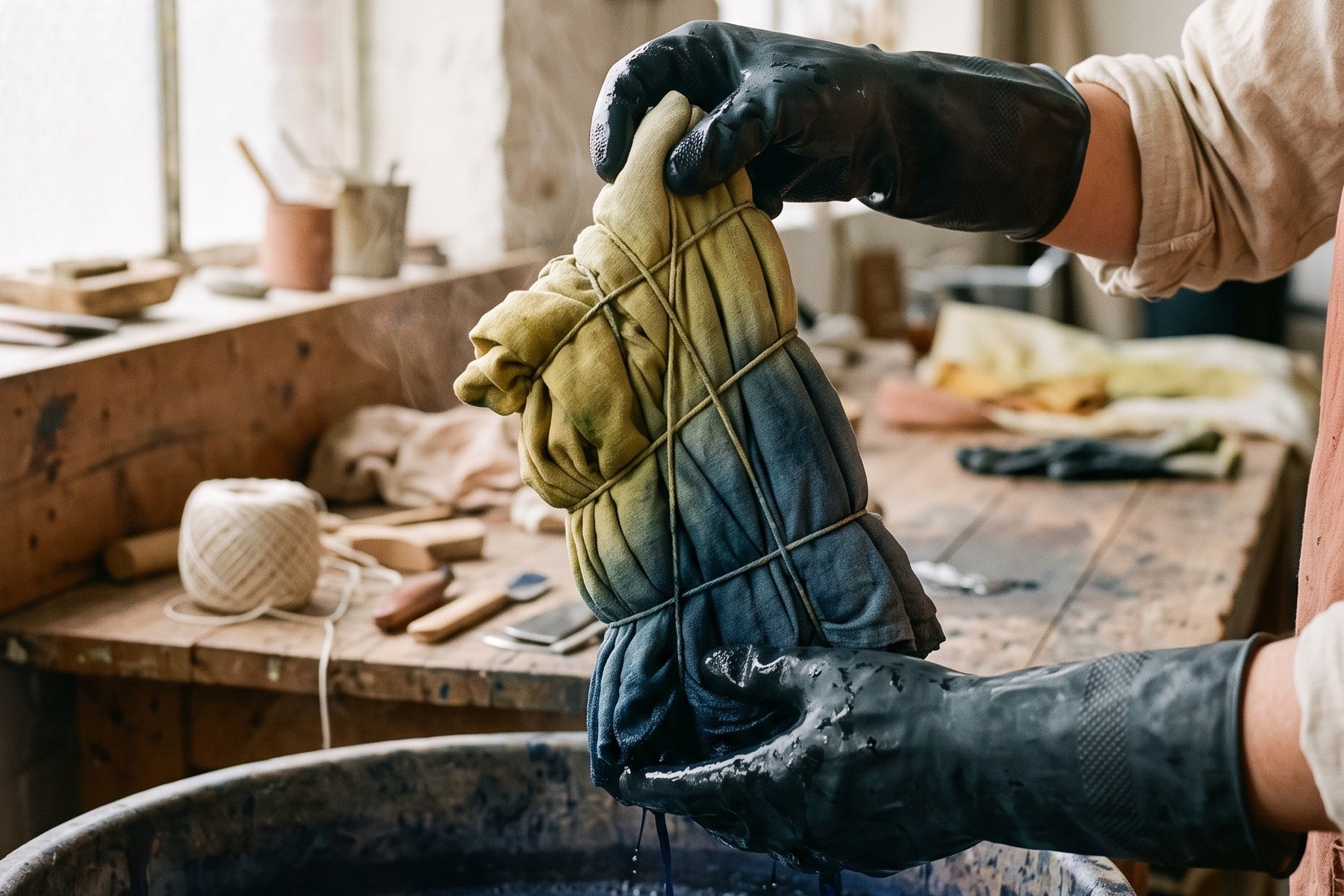
Lifting cloth out of the indigo vat
Summer: picking and drying
Weld is cut just as it flowers. We hang it in bundles in the drying room, and for a few weeks the whole studio smells faintly of hay.
Weld: yellows, and greens over blue
Woad: pale to mid blue
Madder root: corals, reds and pinks
Dyer’s chamomile: warm golds
Autumn and winter: the dye pots
Most of our dyeing happens in the colder months, once the harvest is dry and stored. Wool and silk take colour most readily; linen and cotton need a little more preparation first.
“
The same plant gives a different colour every year. I’ve stopped trying to repeat it and started enjoying it.
Ada Okafor, Dyer and weaver
Weaving with garden-dyed yarn

In class you dye a set of skeins from the garden and take home a small sample book with notes on every pot.

Written by
Ada Okafor
Dyer and weaver
Grows half of the dye garden herself.
Published
Reading time
4 min read
Share this story
● More from the journal


