
Techniques
·
3 min read
How to make a ring that actually fits

Words by
Peter Lund
Fingers swell in summer, shrink in the cold and are rarely the same size on both hands. Peter’s guide to sizing a ring you will want to wear every day.

Most rings that end up in a drawer were never really the wrong design. They were the wrong size. Here is how we make sure the ring you make at the bench is one you will wear every day.
Measure at the right time
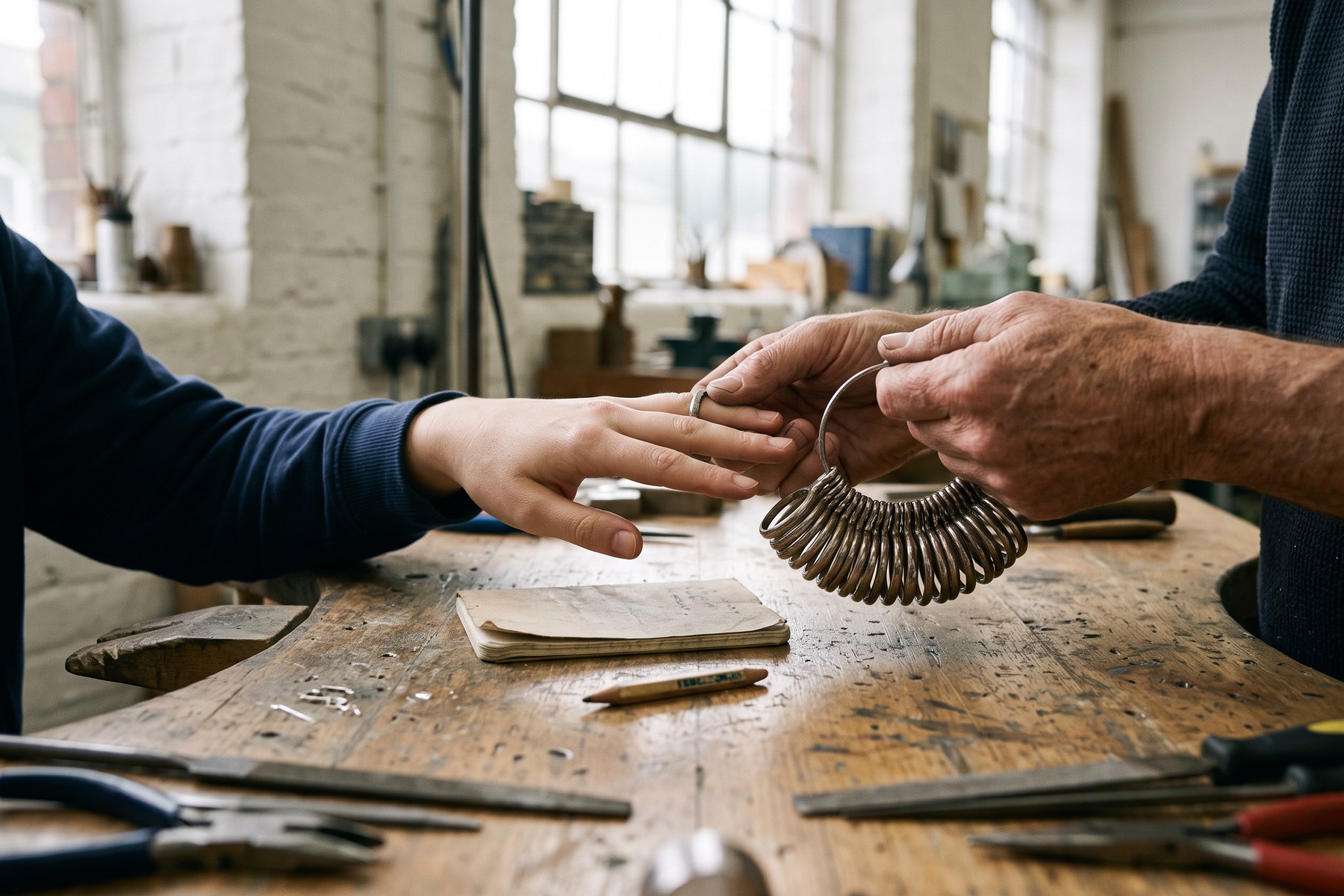
Fingers change through the day. They swell when it is warm and after exercise, and shrink in the cold. We size at the start of class, once your hands have warmed up, and check again just before we cut the silver.
Trying on ring sizers at the bench
Width changes everything
A wide band fits tighter than a thin one of the same size, because it covers more of the finger. For anything wider than six millimetres, we usually go up half a size.
Thin bands up to 3 mm: your usual size
Medium bands, 4 to 6 mm: your usual size or a quarter up
Wide bands over 6 mm: half a size up
“
A ring should go over the knuckle with a little push and then sit still. If it spins, it is too big.
Peter Lund, Silversmith
Small fixes after soldering
If a finished ring is a touch tight, we can stretch it on a steel mandrel by up to half a size. Going smaller means cutting and soldering again, so it is always better to start slightly snug.
Stretching a band on the mandrel

Not sure of your size before you book? Ask for a sizer when you arrive, or measure an old ring that fits and bring the number with you.

Written by
Peter Lund
Silversmith
Forty years at the bench and still learning.
Published
Reading time
3 min read
● More from the journal


